
Median Wait Time
From request to cardiologist on screen
Consultations Completed
Across all 50 states since 2021
Reclassified After First Visit
Conditions missed elsewhere, caught here
Your heart doesn't wait. Neither should your cardiologist.
Three cardiologists. Three concepts. One conversation that changes everything.

Dr. Meera Nair
Cardiac Electrophysiologist
18 yrs · 4,200+ ablations
What AFib looks like — and why your Apple Watch might be right.
Atrial fibrillation is the most common cardiac arrhythmia, affecting 6 million Americans. Unlike a normal rhythm where the atria contract in an organized pattern, AFib produces chaotic, rapid electrical signals. The EKG strip tells the story clearly: the irregular R-R intervals and absent P-waves are unmistakable once you know what you're looking for. Wearable devices now detect this with 98.3% sensitivity — which means if your watch flagged something at 2 a.m., that flag deserves a board-certified review, not a Google search.
Palpitations that come and go. A racing heart during ordinary tasks. Fatigue that feels disproportionate. These are not anxiety — they are the three most common patient-reported symptoms before a confirmed AFib diagnosis.
Normal sinus rhythm vs. atrial fibrillation — the chaotic baseline and irregular spacing are the signature.
Why this matters now
AFib increases stroke risk 5×. Early detection and anticoagulation therapy reduces that risk by up to 64%.
Dr. James Okafor
Interventional Cardiologist
14 yrs · 2,800+ procedures
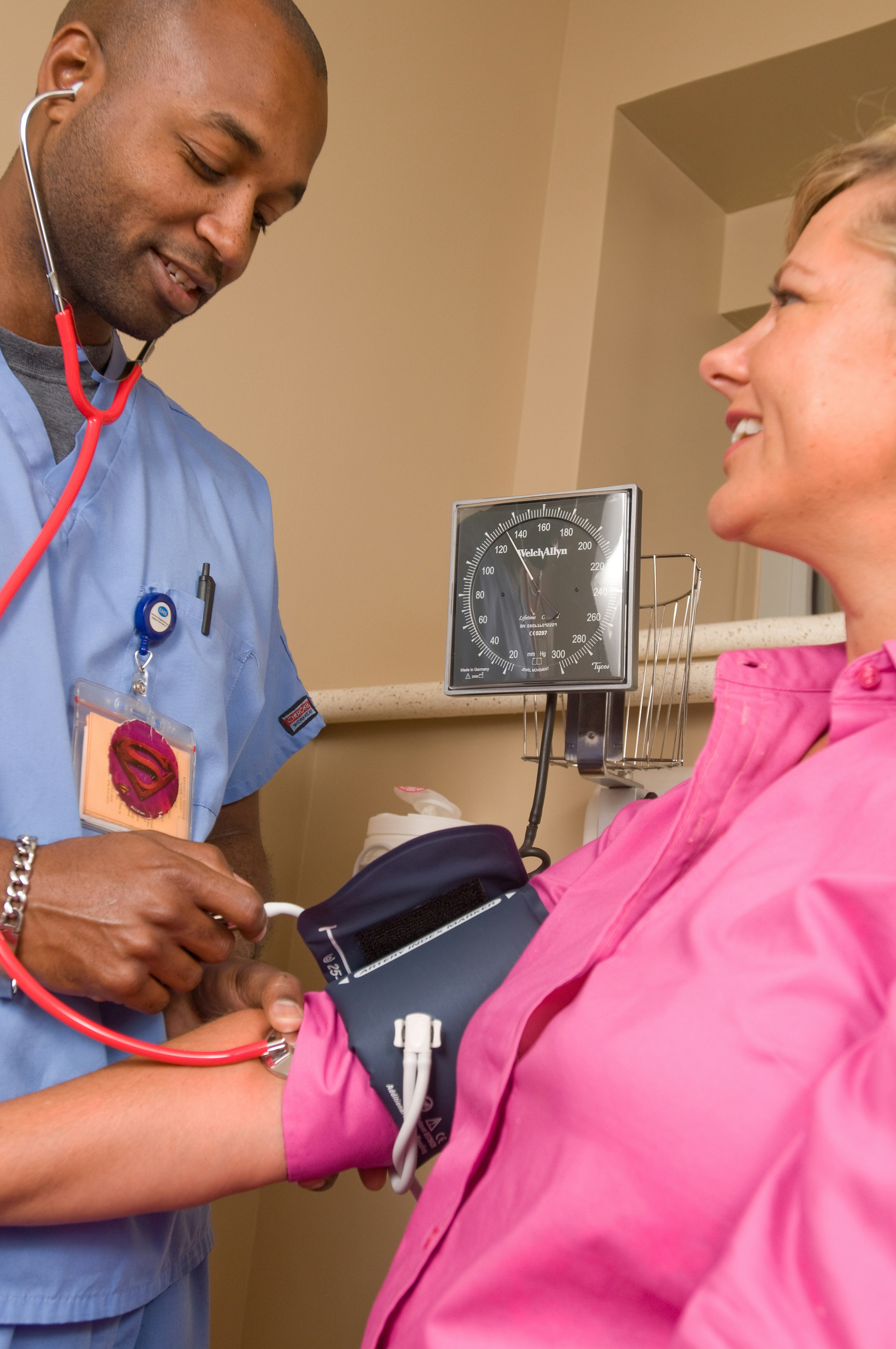
The 130/80 threshold that changed cardiology — and the statin myths that persist.
130/80 mmHg is the current ACC/AHA threshold for hypertension Stage 1. Not 140/90. This single reclassification in 2017 changed treatment decisions for 31 million Americans overnight. And yet, a majority of patients still believe their "borderline" numbers are fine. They are not fine — they are an opportunity. Statins carry a similar mythology. "Muscle pain" affects fewer than 1 in 10 patients on therapeutic doses. The cardiovascular risk reduction they provide — 25-35% reduction in major cardiac events — is among the most robust findings in medicine.
If your last primary care visit produced numbers "just above normal" with a recommendation to "watch it" — that is the moment a cardiologist should weigh in. We have 40 minutes and a specific protocol for exactly this conversation.
Where 130/80 sits on the risk spectrum — and why the zone matters for treatment decisions.
Why this matters now
Untreated Stage 1 hypertension doubles 10-year cardiovascular risk. A 15-minute medication review can change that trajectory.
Download Our Heart Health Guide
A 28-page clinical reference written by our cardiologists — free.
Dr. Sofia Reyes
Non-Invasive Cardiologist
11 yrs · 6,000+ echos read
After the stent: what the discharge sheet doesn't tell you.
Percutaneous coronary intervention — stenting — has a 97% procedural success rate. What the discharge paperwork underserves is the recovery arc. Dual antiplatelet therapy compliance in the first 12 months is the single most critical factor in preventing re-stenosis, yet 1 in 4 patients self-discontinues within 6 months due to side effects or misunderstanding. The recovery curve above is real: most patients reach 90% functional capacity by week 12, but the path is not linear, and the questions that arise at week 3 are not the same as week 8. Having a cardiologist accessible between the 30-day and 6-month follow-ups is where virtual care changes outcomes.
Chest discomfort after a stent is almost never a sign of failure — but "almost never" is not the reassurance you need at 11pm when you feel it. It is, however, exactly the conversation we are here to have.
Functional capacity recovery after PCI — week-by-week milestone expectations.
Why this matters now
30% of post-PCI readmissions in the first year are preventable with proactive monitoring and timely medication adjustments.
"My Apple Watch flagged AFib at 1 a.m. I was talking to Dr. Nair by 1:08. She ordered a 14-day monitor that night."
Marcus T.
Software Engineer, Austin TX
"I live 94 miles from the nearest cardiologist. Pulse gave me the same quality of care I'd expect at a major academic center."
Ruth & Dale F.
Retired, rural Montana
"After my stent I had a hundred questions. My discharge instructions answered two of them. Pulse answered the other ninety-eight."
Priya K.
Radiologist, Chicago IL
"I'd been told my 135/85 was 'fine' for three years. Dr. Okafor had me on treatment within a week. That was 18 months ago."
Theodore B.
Attorney, Boston MA
"The cardiologist pulled up my echo on screen and walked me through every measurement. I finally understood what was happening."
Sandra M.
Teacher, Phoenix AZ
"Chest tightness during my morning runs. Urgent care said 'stress'. Pulse said 'let's look at your stress test results together.'
David L.
Marketing Director, Seattle WA
"My Apple Watch flagged AFib at 1 a.m. I was talking to Dr. Nair by 1:08. She ordered a 14-day monitor that night."
Marcus T.
Software Engineer, Austin TX
"I live 94 miles from the nearest cardiologist. Pulse gave me the same quality of care I'd expect at a major academic center."
Ruth & Dale F.
Retired, rural Montana
"After my stent I had a hundred questions. My discharge instructions answered two of them. Pulse answered the other ninety-eight."
Priya K.
Radiologist, Chicago IL
"I'd been told my 135/85 was 'fine' for three years. Dr. Okafor had me on treatment within a week. That was 18 months ago."
Theodore B.
Attorney, Boston MA
"The cardiologist pulled up my echo on screen and walked me through every measurement. I finally understood what was happening."
Sandra M.
Teacher, Phoenix AZ
"Chest tightness during my morning runs. Urgent care said 'stress'. Pulse said 'let's look at your stress test results together.'
David L.
Marketing Director, Seattle WA
Talk to a cardiologist tonight.
Three questions. Under two minutes. A board-certified heart specialist on screen within the hour — reading your history, not a template.
Board-certified in cardiac electrophysiology, interventional cardiology, and echocardiography
HIPAA-compliant. Your records stay yours.
Accepts 40+ insurance plans. Self-pay options from $95.
Median wait: under 8 minutes from request to cardiologist.